
Japan
Nagoya
- Who it suits
- Travellers passing between Tokyo and Kyoto, and lovers of castles and museums.
- Best season
- November: high 17.3 °C, low 8.6, 6.1 rain days, 79.1 mm. December: 11.7 and 3.4, 6.2 days, 56.6 mm. January: 9.3 and 1.1, 5.2 days, 50.8 mm. February: 10.5 and 1.4, 6.2 days, 64.7 mm (1991–2020 normals from the Japan Meteorological Agency; a rain day is 1 mm or more)
- Daily budget
- No verified data yet
- Where to stay
- Not written yet
- Alerts
- Closed for renovation from 2 November 2026 to 14 April 2028; grand opening on 15 April 2028
Data status
54of 25 verified facts required for publishing
10 of 11 sections complete
Practical destination cardYour next step
Tools for this destination
Destination guide / Nagoya
Small details. A tidier trip.
Take what you need, when you need it.
Who's this destination for?Who it suits and who it doesn't
Get to know the city before choosing your trip.At a glance
A Japanese city served by Central Japan International Airport (Centrair), reached by the μ-SKY train on two tickets or the Meitetsu limousine bus to Sakae and Fushimi.
Choose your timeSeasons by experience and budget
Seasons and experiences that suit your trip.Sourced facts (2)
Winters are cold (January high 9.3 °C, low 1.1), summers hot (August high 33.2); July is the wettest month (211.4 mm). Normals are for 1991–2020.
- Climate November–February
- November: high 17.3 °C, low 8.6, 6.1 rain days, 79.1 mm. December: 11.7 and 3.4, 6.2 days, 56.6 mm. January: 9.3 and 1.1, 5.2 days, 50.8 mm. February: 10.5 and 1.4, 6.2 days, 64.7 mm (1991–2020 normals from the Japan Meteorological Agency; a rain day is 1 mm or more)
- Climate in July and August
- July: high 31.4 °C, low 23.5, 12.0 rain days, 211.4 mm. August: 33.2 and 24.7, 8.5 days, 139.5 mm (1991–2020 normals from the Japan Meteorological Agency)
Plan your stayAreas to stay
Accommodation details and stay-related information.Incomplete
No information has been added to this section yet. The section is published once its sources are verified.
Discover the citySights, nature, markets and activities
Sights, markets and activities in one place.At a glance
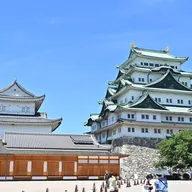
Starter list: Nagoya Castle (9:00–16:30). Nagoya City Museum is closed for renovation from 2 November 2026 to 14 April 2028. Entry prices are in the cost section.
Food and prayerFood, halal and prayer
Halal information and what you need during your day.At a glance
Look for halal certification at the restaurant or on the product, and ask about the ingredients if in doubt. The Tokyo Mosque (Tokyo Camii) welcomes visitors daily; the verified details are in this section.
Get around easilyArrival and getting around
From arriving at the airport to getting around the city.Sourced facts (16)
- μ-SKY train from the airport to Nagoya
- Two tickets are needed: a regular passenger ticket and a μ Ticket (first-class car ticket)
- μSKY cars
- All cars on the 2000 Series μSKY are first-class cars (μ Ticket needed in any car)
- μ-SKY platform at Centrair station
- The μ-SKY departs from platform 1
- Airport Train Ticket for overseas visitors
- Sold only to overseas visitors, one-way or round trip, online through Meitetsu World Travel; the page gives no price
- Centrair Limousine to Sakae/Fushimi: airport stop
- Terminal 1, bus stop No. 6
- Limousine stop in Sakae
- In Sakae inside Oasis 21 at stop No. 9; other stops are Nishikidori Honmachi and Nagoya Kanko Hotel. Fushimi has no ticket counter, so the fare is paid on the bus
- Paying on the Centrair Limousine
- Credit-card touch payment works on all buses and IC cards are accepted, with a tap on boarding and on alighting; some runs (yellow-framed in the timetable) are cashless trials where cash is in principle not accepted
- Direct Meitetsu bus from the airport to Nagoya Station
- Visit Nagoya lists the service as suspended; the airport's page carries an ambiguous note that bus services are suspended, while the Sakae/Fushimi limousine is running
- Centrair taxis
- Fixed fares were abolished on 10 December 2007; taxis from Centrair run on the meter
- IC cards on the Nagoya subway
- manaca is accepted, plus TOICA, Kitaca, PASMO, Suica, PiTaPa, ICOCA, Hayakaken, nimoca and SUGOCA
- Card-touch payment on the subway
- Possible at all Nagoya subway stations since 3 September 2026; some ticket gates do not accept it
- Nagoya–Takayama highway bus: 16–17 November
- Because of night works on the Tokai-Hokuriku Expressway (Gujo-Hachiman Interchange exit towards Toyama) on 16–17 November 2026, 20:00 to 6:00 the next morning, the Gujo-Hachiman Inter stop is suspended for the 18:30 and 20:30 departures from Meitetsu Bus Center to Takayama Nohi Bus Center; the line is reservation-only, and the Meitetsu highway bus reservation centre is 0570-08-0489
- Visit Japan Web
- A government online service for arrival formalities (immigration and customs) and tax-free shopping
- JESTA electronic travel authorisation
- Not yet in force; it will start on a date set by the government, no later than 31 March 2029
- Driving side
- On the left-hand side of the road
- Driving with a foreign licence
- A paper international driving permit issued under the 1949 Geneva Convention by a country party to it, valid for one year from your arrival; copies on a card or phone are not accepted
Plan your spendingCost estimates
Available costs, with their sources and dates.Sourced facts (13)
- Taxi base fare in the Nagoya area
- Upper limit for a standard car: ¥500 for the first 0.91 km (from 14 October 2025)
- Taxi distance rate in Nagoya
- Upper limit for a standard car: ¥100 per 232 m after the first 0.91 km (from 14 October 2025)
- Subway single fare (adult)
- From ¥210 (zone 1, up to 3 km) to ¥340 (zone 5, over 15 km)
- City bus fare (adult)
- ¥210 flat across the board
- Bus & Subway 1-Day Ticket
- Adult ¥870, child ¥430
- Donichi Eco Kippu (weekends and holidays)
- Adult ¥620, child ¥310, for city bus and subway on Saturdays, Sundays, holidays and the 8th of each month
- Me~guru sightseeing bus One-Day Pass
- Adult ¥500, child ¥250
- Nagoya Castle admission
- Admission fees changed from 1 October 2026; adult ¥1,000
- Currency
- Japanese yen; banknotes of 1,000, 2,000, 5,000 and 10,000 yen
- Card payments
- Cards are accepted at major hotels, large shops and shopping centres; Visa, JCB and Mastercard are the most widely accepted, and contactless payment works in most large shops; always carry some cash
- Consumption tax
- 10%, with a reduced rate of 8%
- Tax refunds for tourists
- From 1 November 2026: you pay the tax-inclusive price at tax-free shops, and the tax is refunded once customs confirms on departure, for purchases of 5,000 yen or more excluding tax from the same shop on the same day; show your passport at the tax-free kiosk in the departure area within 90 days of purchase and before checking in your bags
- Departure tax
- 3,000 yen per departure from Japan since 1 July 2026, usually collected by airlines and shipping lines as part of the ticket price; infants under 2 are exempt
Before you head outOpening hours, booking and accessibility
Opening hours, booking and accessibility.Sourced facts (6)
- New limousine timetable from 1 November 2026
- A new Limousine timetable starts on Sunday 1 November 2026, so departure times are not listed here
- Me~guru operating days
- Runs Tuesday to Sunday
- Nagoya City Museum closure
- Closed for renovation from 2 November 2026 to 14 April 2028; grand opening on 15 April 2028
- Nagoya Castle hours
- 9:00–16:30, entrance until 16:00
- Nagoya Castle year-end closure
- Closed 29 December – 1 January
- Nagoya Congress Center closure
- Closed for renovation from 1 February 2025 to 31 March 2027; reopens on 1 April 2027
Watch out for theseLocal customs and alerts
Local customs and alerts that matter to you.Sourced facts (4)
Don't carry more than a month's supply of prescription medicines without prior import confirmation, as some medicines are prohibited or need permission. Declare cash over 1 million yen. Smoking is banned on the streets of Chiyoda ward in central Tokyo, and traffic drives on the left. Verified details are in this section.
- Cash declaration
- You must declare cash or other means of payment exceeding 1 million yen
- Duty-free allowance
- Per adult: 3 bottles of alcoholic drinks (about 760 ml per bottle), 200 cigarettes, perfume up to 2 ounces (about 56 ml), and other goods worth less than 200,000 yen
- Prohibited items
- Bringing in narcotics, including heroin, cocaine, cannabis, stimulants and psychotropic substances, is prohibited except where exempted by the Ministry of Health
- Personal medicines
- Without formalities: prescription medicines up to one month's supply, and other medicines up to two months' supply; anything more needs an ‘Import Confirmation’ before you travel; narcotic medicines and stimulant raw materials need prior permission from the Japanese government, and some are prohibited
Keep your plan flexibleFlexible itineraries and alternatives
Itineraries and alternatives to plan your trip around.At a glance
No suggested programme for this city yet; one will be added once sight hours and prices are verified.
Keep itServices, official links and emergencies
Services, official links and emergency numbers.Sourced facts (13)
- City Bus & Subway Telephone Center
- 052-522-0111, 8:00–19:00; the page does not say which languages are served or on which days
- #7119 emergency advice in Nagoya
- #7119, 24 hours, 365 days; nurses give advice (whether you need an ambulance); the page does not say whether callers outside Nagoya are served
- If #7119 does not connect
- Call 052-951-7119
- Languages of the Nagoya #7119 line
- The line serves 21 languages including English, Chinese and Korean; Arabic is not among them
- Aichi Emergency Medical Information Center
- 052-263-1133 refers you to a suitable medical facility daily, 24 hours; the page shows no foreign-language line
- Police
- 110
- Fire and ambulance
- 119
- Visitor Hotline (JNTO)
- 050 3816 2787, 24 hours a day, every day of the year, in English, Chinese and Korean
- Time zone
- UTC+9, five hours ahead of UAE time
- International dialling code
- 81, preceded by + in international format
- Voltage
- 100 V throughout Japan; any device that doesn't work at this voltage needs a voltage converter
- Frequency
- 50 Hz in eastern Japan, including Tokyo, and 60 Hz in the west
- Plug type
- Plug with two flat pins
Service pages explain how to compare offers and book directly with the provider yourself. The platform doesn't sell or book anything.
No results for that word
Try another word, or go back to all guide sections.
Every fact is linked to its source and check date, inside the section details.
How do we verify?Header image: Bariston — CC BY-SA 4.0 (cropped thumbnail)